Last checked: 2026-08-29
Budapest thermal baths are the other half of the city’s identity — the half you sit in. Budapest sits on a fault line of hot springs, and bathing culture here runs from Roman garrisons through Ottoman hammams to the grand bathing palaces of the 1900s, four of which still dominate any sensible shortlist: Széchenyi, Gellért, Rudas and Lukács. This guide compares them honestly, then answers the questions every first-timer has about swimsuits, lockers and how long a soak actually takes.
Quick vocabulary before the comparison: “fürdő” on the facade means bath, and each of these is a thermal bath — fed by natural hot springs and built for soaking — rather than a swimming pool complex, though the big ones contain both kinds of pool. That distinction drives most of the practical rules below, from swim caps to time limits.
The audience for baths and river cruises is the same person on the same trip, so plan the classic combo day from the start: three hours in a bath in the afternoon, a one-hour night cruise after dark. One relaxes you; the other does the sightseeing while you sit down.
The big four Budapest thermal baths compared
| Széchenyi | Gellért | Rudas | Lukács | |
|---|---|---|---|---|
| Built | 1913 | 1918 | Ottoman core, 1550s | 19th c., older spring use |
| Where | City Park (Pest) | Foot of Gellért Hill (Buda) | Below Gellért Hill, riverside (Buda) | Buda, near Margaret Bridge |
| Pools | 15 indoor + 3 outdoor | Indoor Art Nouveau halls + outdoor pool | Octagonal Ottoman pool + rooftop pool | Mixed thermal + swimming pools |
| Signature | The huge yellow-walled outdoor pools | The prettiest interiors in the city | Rooftop hot tub overlooking the Danube | Local regulars, wellness courtyard |
| Price | Full-day pass from €39 (★4.3, 27,000+ reviews) | Similar range; check official site | Similar range; check official site | Cheapest of the four |
| Crowds | Heaviest — most iconic, most touristed | Busy, calmer than Széchenyi | Moderate; busiest at sunset | Lightest |
| Best for | First visit, winter steam, photos | Architecture lovers, rainy days | Sunset soak with a view, history | Budget, authenticity, repeat visitors |
Széchenyi: the icon
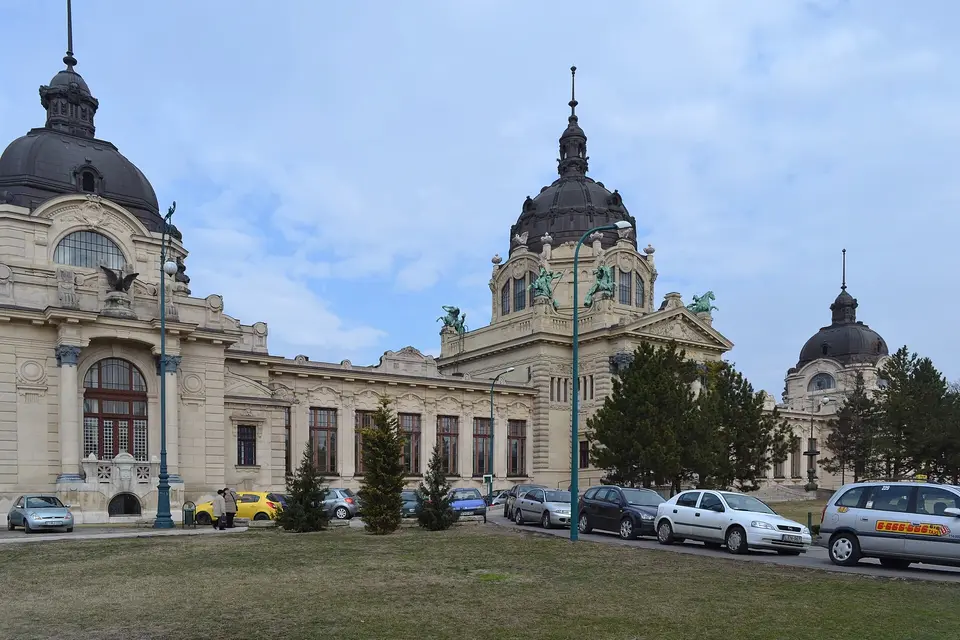
The one on every postcard: a neo-baroque bathing palace from 1913 in City Park, with 15 indoor pools and 3 big outdoor ones — including the outdoor thermal pool where old men famously play chess in the water. A full-day pass starts from €39 as listed on GetYourGuide at the time of writing, and with 27,000+ reviews it is one of the platform’s most-reviewed products in Europe; get the Széchenyi full-day pass to skip the ticket window. The honest downside: it is the most crowded bath in Budapest, especially midday in summer. Come at opening or after 18:00.
Gellért: the beautiful one
Opened in 1918 beside the hotel of the same name, Gellért is where the Art Nouveau budget went: turquoise Zsolnay tiles, columned halls, stained glass over the indoor pool. If you care more about interiors than pool count, this is your bath — and it pairs naturally with Gellért Hill and the Liberty Bridge area on a Buda-side day (see how in our things to do guide).
Rudas: the historic one with the view
Rudas is two baths in one: an octagonal pool under a domed Ottoman bathhouse from the 1550s, dim and steamy and genuinely 470 years old — and, upstairs in the modern wellness wing, a rooftop hot pool looking straight out over the Danube. Time the rooftop for sunset and you get the bridges lighting up from water that’s warmer than the river view from any boat deck. Note Rudas keeps some single-sex, traditional sessions in the Ottoman section on certain days; check the schedule on the official site before you go.
Lukács: the local one
Lukács is where Budapesters actually go: cheapest entry of the four, drinking-cure fountain, wall plaques from cured patients, and no tour groups. The architecture is modest next to Gellért, which is exactly why the crowd is thin. If you’re on a second visit to Budapest, or allergic to queues, start here. It has also historically been the bath where Budapest Card holders get bath-related benefits — check the card’s current benefits list before counting on it.
Practicalities: what first-timers actually need to know
Getting to each bath
- Széchenyi: M1 metro (the historic yellow line, itself worth riding) to Széchenyi fürdő station, directly outside the entrance.
- Gellért: trams 47/49 from Deák Ferenc tér, or tram 19/41 along the Buda embankment to Szent Gellért tér; it faces the Buda end of Liberty Bridge.
- Rudas: bus 7 or a 10-minute walk south along the Buda embankment from the Elisabeth Bridge; it sits right on the riverbank below Gellért Hill.
- Lukács: trams 4/6 across Margaret Bridge to the Buda side, then a short walk north; tram 17/19/41 stops closer.
All four are inside the transit network — no taxis needed. If you’re bath-hopping, note Gellért and Rudas are a 15-minute riverside walk apart, the only pair realistically doable in one day.
What to bring
- Swimsuit — required everywhere at all mixed sessions.
- Flip-flops — the floors are wet stone; bring them from home rather than paying spa-shop prices.
- Towel — rentable, but queues and deposits make packing a quick-dry towel easier.
- Swim cap — only needed in designated lap-swimming pools, not in thermal pools.
- Waterproof phone pouch — optional, but the photos you want are in the water.
Tattoos are fine in every Budapest bath; nobody looks twice. Kids are a different matter — thermal pools generally carry age limits and policies differ by bath, so check szechenyifurdo.hu or gellertbath.hu before planning a family visit.
Cabins vs lockers
Every ticket includes either a locker (changing in a shared room) or a cabin (a private lockable changing booth) for a few euros more. Take the cabin if you’re carrying valuables or just prefer not to change in public — it doubles as your own base for the visit. Both lock electronically with your entry wristband.
Thermal pools vs swimming pools
The naming confuses everyone once. Thermal pools are the hot mineral ones, typically 30–40 °C, for soaking, not swimming; the etiquette is slow and quiet. Swimming pools are cooler, lap-oriented and cap-mandatory. The saunas and steam rooms are included in your ticket at all four baths. Work a circuit: warm pool, hotter pool, sauna, cold plunge, rest, repeat — and cap the hottest pools at 15–20 minutes a round, with water in between.
How long, and when to go
Plan about 3 hours — under two feels rushed, over four turns you to soup. Morning visits (right at opening) get the cleanest water and emptiest pools; late evening gets atmospheric lighting and a post-sightseeing wind-down. Midday in July–August at Széchenyi is the one slot to actively avoid.
Winter deserves its own sentence: sitting in 38 °C outdoor water while steam pours off the surface into freezing air is the single best thermal bath experience Budapest offers, and reason enough to visit off-season — more on that in our when to visit guide. The dash from door to pool is 10 unpleasant seconds; the following hour makes up for it.
Massages, extras and the small print
All four baths sell add-ons — massages, private thermal sessions, aroma treatments — bookable at the desk or online. Book massages online with your entry ticket if you want one; walk-up slots at Széchenyi vanish by mid-morning in season. Skip the in-house restaurants: they are fine but unremarkable, and City Park (at Széchenyi) or the market-hall side of Liberty Bridge (at Gellért) feed you better for less.
The unglamorous practicalities, so nothing surprises you at the turnstile:
- Payment: cards are accepted everywhere, including for towel rental deposits; no need to carry forint in a swimsuit.
- Valuables: the wristband lockers are secure, but the classic mistake is leaving your phone poolside while you sauna — use a cabin or keep it in a pouch.
- Etiquette: shower before entering pools, keep thermal-pool conversation quiet, and don’t swim laps in a soaking pool — the regulars will let you know, in Hungarian.
- Health notes: the mineral water is the point, but it’s warm and mineral-heavy — hydrate, and skip the hottest pools if you’re pregnant or have heart or blood-pressure conditions, or clear it with a doctor first.
- Glasses and contacts: steam rooms fog glasses instantly; contacts or just squinting work better.
Sparty: the Saturday night bath party
On Saturday nights, Széchenyi flips formats: the outdoor pools host Sparty, a ticketed night-time party with DJs, lights and a young international crowd. It is loud, crowded and nothing like a daytime soak — which is precisely the appeal for the same crowd that books a party cruise on the Danube; plenty of people do both in one weekend. Sparty runs on separate tickets that do sell out, so book ahead — unlike regular bath entry, which rarely does.
If a wet party isn’t your format but a floating one might be, see what the party boats offer — same energy, better skyline.
Fitting the baths into your Budapest days
A bath is a half-day anchor, so build around it. The pairings that work:
- Széchenyi + City Park and Heroes’ Square, then M1 metro back to the river for an evening cruise.
- Gellért + Great Market Hall across Liberty Bridge, and the walk up Gellért Hill if your legs agree.
- Rudas at sunset + dinner in the center — the dinner cruise departs a few minutes’ walk upriver along the Pest embankment.
- Lukács + Margaret Island, right across Margaret Bridge.
Prices for all four drift by season and day of week, so treat the figures here as “from” pricing and confirm on the official baths sites or the ticket page before you go. And whichever bath you choose, hold the evening open: Budapest thermal baths by daylight and the floodlit riverbank from a boat after dark is the one two-item itinerary that never disappoints.
Frequently asked questions
Which is the best thermal bath in Budapest?
Széchenyi for the iconic outdoor pools and first visits, Gellért for the prettiest Art Nouveau interiors, Rudas for the Ottoman dome and rooftop pool at sunset, Lukács for local prices without the crowds.
How much do Budapest thermal baths cost?
A Széchenyi full-day pass starts around €39 via GetYourGuide; Gellért and Rudas are broadly similar, and Lukács is noticeably cheaper. Exact rates are on the official baths sites and shift by day and season.
Do I need to book Budapest baths in advance?
Usually no — walk-ups work at all four on normal days. Book ahead only for the Saturday Sparty at Széchenyi and around holidays like New Year.
What do I need to bring to a thermal bath?
Swimsuit, towel and flip-flops as a minimum; a swim cap only if you use the lap-swimming pools. Everything is rentable or buyable on site, at tourist prices.
How long should I spend at the baths?
Plan about three hours: enough for the thermal pools, saunas and an outdoor soak without rushing. Limit time in the hottest pools to 15–20 minutes at a stretch and drink water.
Are the baths open in winter?
Yes, and winter is the best time — soaking in a 38 °C outdoor pool with steam rising into freezing air is the signature Széchenyi experience. Bring a robe or dry towel for the dash between building and pool.
Are tattoos allowed in Budapest baths?
Yes — tattoos are normal in all Budapest baths and no covering is required.
Can children visit the thermal baths?
Policies vary: thermal pools generally have age limits, while swimming pools are more open, and rules differ by bath. Check the official site of your chosen bath before going with kids.