Last checked: 2026-08-29
There are more things to do in Budapest than a city break can hold, so this page is a filter, not an encyclopedia: fifteen sights and experiences that repay the time, grouped by area, each with a realistic price, duration and the best time of day. The Danube runs through everything here — the riverbanks have been a UNESCO World Heritage site since 1987, and the smartest itineraries treat the river as a sight in itself, not just a line on the map.
Use the groups below to build your days, then steal the sample itinerary at the end.
From the water: see the city the easy way
1. Take a night cruise. The single best-value sight in Budapest is Budapest itself, lit up and seen from a boat. The best-selling format is a one-hour sightseeing loop with a welcome drink from about €11 as listed on GetYourGuide at the time of writing (★4.4, 23,000+ reviews). Board no later than 21:00–21:30 in summer — monument lighting switches off around 22:00–23:00. Full details and honest downsides are on our night cruise guide, or check live availability for the night cruise.
2. Or pick a different cruise format. Daytime loops run from about €12 if you want photos in full light; sunset departures catch the golden hour; dinner cruises (roughly €41–110) make an evening of it; prosecco and party boats skew younger; a private charter works for groups and proposals. The hop-on hop-off boat doubles as transport along the embankments. Our best cruises comparison sorts all of them by budget and occasion in one table.
3. Ride tram 2 along the Pest embankment. Not a boat, but the next best thing: one of Europe’s most scenic tram lines runs the length of the Pest riverside past Parliament and the Chain Bridge for the price of a standard transit ticket. Ride it at dusk; sit on the river side. It also solves dock logistics — it stops at Vigadó tér and Kossuth Lajos tér, right where most cruises board.
A note on where boats leave from, since it decides where you’ll be standing at dusk: the main tourist docks cluster on the Pest embankment between Elisabeth Bridge and Margaret Bridge — Vigadó tér (docks 5–9) for most sightseeing and dinner boats, Akadémia dock near the Chain Bridge for several evening and party boats, and the Jane Haining rakpart docks just south of Vigadó. Your ticket names the dock; arrive 15 minutes early because boarding queues form fast on summer evenings, and the best upper-deck spots go first.
Castle District: Buda’s old town on the hill
4. Buda Castle. The former royal palace crowns Castle Hill and now houses museums and galleries; the terraces in front are free and give the classic panorama over the Danube and Pest. Plan 1–2 hours for the grounds alone, more if you enter a museum. Walk up from Clark Ádám tér in about 15 minutes or take the bus if the funicular queue is long.
5. Matthias Church. The coronation church of Hungarian kings, with a diamond-patterned tiled roof and a painted interior unlike any other church in the city. Entry is ticketed; 30–45 minutes is enough. Mornings are quietest.
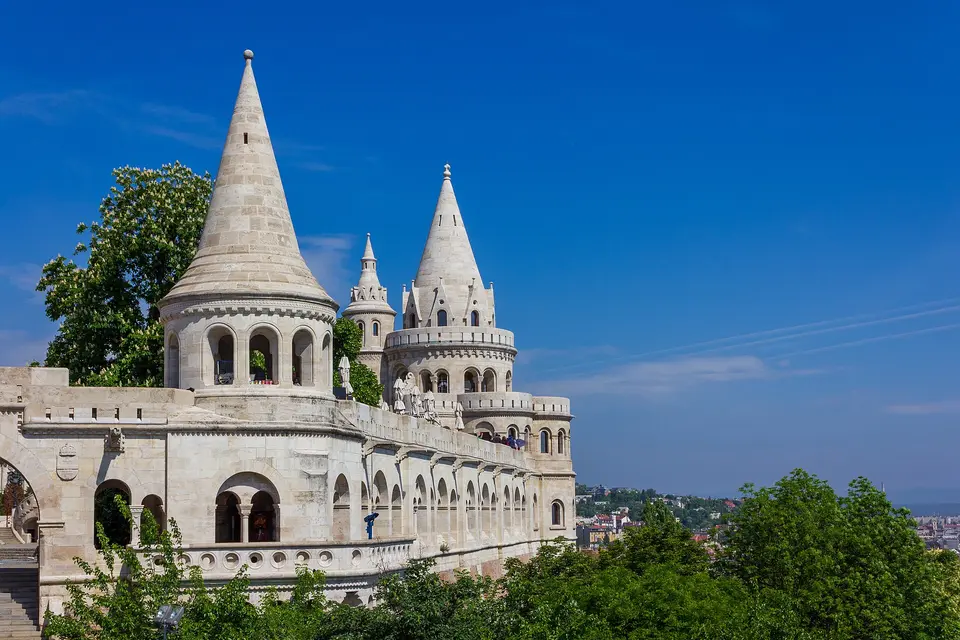
6. Fisherman’s Bastion. The neo-Romanesque terrace next to Matthias Church exists mostly for the view — and the view of Parliament across the river is the best free photo in Budapest. The lower terraces are free at all times; the upper towers charge a small fee in daytime. Go before 9:00 or after sunset to dodge the tour groups.
7. Walk the caves under the castle. Castle Hill is honeycombed with a natural cave system used as a hospital and shelter in WWII. A guided cave walking tour takes about 30 minutes and costs from €17 (★4.6) — a good wet-weather option. Book the castle caves tour ahead in July and August.
Pest side: Parliament, the Basilica and the market
8. Hungarian Parliament. Completed in 1904, with a 96 m dome, it is the largest building in Hungary and the sight every cruise slows down for. Go inside on a timed-entry audio-guide visit from €43 (★4.5, 5,600+ reviews) — it sells out days ahead in summer, so book Parliament entry early. The full strategy, including EU vs non-EU pricing, is in our Parliament visiting guide. Pair it with the Shoes on the Danube memorial just south along the embankment.
9. St Stephen’s Basilica. Budapest’s largest church, entry from €12 (★4.6, 14,500+ reviews); climb or ride the lift to the dome terrace for a 360° city view. Allow about an hour. The square in front hosts the main Christmas market from late November.
10. Great Market Hall. The 1897 iron-and-tile market at the Pest end of Liberty Bridge: produce and paprika downstairs, lángos and folk crafts upstairs. Go hungry, go in the morning, skip Sundays (closed). Free to enter; budget 45–60 minutes.
11. Ruin bars in the Jewish Quarter. Bars built into derelict pre-war courtyards, all mismatched furniture and fairy lights — Szimpla Kert is the original and still the benchmark. Free to wander; drinks cost more than in a normal local pub but less than in most Western capitals. Weeknights are far more relaxed than Fri–Sat, when stag parties take over the district. Szimpla is genuinely worth seeing even if you don’t drink — go before 21:00, look at the building, leave when the queue outside starts to snake.
12. Coffee at a grand café. The New York Café calls itself the most beautiful café in the world, and the gilded interior makes a fair case; expect a queue and dessert prices to match the chandeliers. If you just want good cake without the theatre, any traditional cukrászda does it for a third of the price.
Thermal baths: the other Budapest institution
13. Soak at Széchenyi, Gellért or Rudas. Budapest sits on thermal springs, and a bath visit is as essential as the river. Széchenyi (built 1913, in City Park) is the iconic one — 15 indoor and 3 outdoor pools, full-day pass from €39 (★4.3, 27,000+ reviews on GetYourGuide); get the Széchenyi day pass or compare it with Gellért’s Art Nouveau halls and Rudas’s Ottoman dome and rooftop pool in our thermal baths guide. Plan about 3 hours and bring flip-flops. Bath by day, cruise by night is the classic Budapest day.
Day trips: the Danube Bend
14. Szentendre. An artists’ town of cobbled lanes, galleries and Serbian churches 40 minutes north. Reachable by suburban rail year-round, but in season the pleasant way is by boat: MAHART PassNave runs seasonal services toward the Danube Bend from Vigadó tér — check the current timetable on the operator’s official site. Half a day is plenty.
15. Visegrád and Esztergom. Further up the Bend: Visegrád’s hilltop citadel has the best river panorama in Hungary, and Esztergom’s basilica is the country’s largest church. MAHART’s seasonal boats and hydrofoils serve both; going by boat one way and bus or train back saves time. This is a full-day trip — start early.
A 2–3 day Budapest itinerary that actually flows
The layout below clusters sights by bank so you are not zigzagging across bridges, and it slots the cruise where it belongs: after dark.
| Time | Day 1 — Buda & the river | Day 2 — Pest | Day 3 (optional) |
|---|---|---|---|
| Morning | Castle District: Buda Castle terraces, Matthias Church, Fisherman’s Bastion before the crowds | Parliament timed-entry tour (book ahead), Shoes on the Danube memorial | Boat or train to Szentendre (Danube Bend) |
| Lunch | Lunch in the Castle District or down at Batthyány tér | Great Market Hall — eat upstairs | Lunch in Szentendre |
| Afternoon | Castle caves tour, then cross the Chain Bridge on foot | St Stephen’s Basilica + dome terrace, coffee at a grand café | Return mid-afternoon; ride tram 2 at dusk |
| Evening | Széchenyi Baths (3 hours, quieter after 18:00) | Night cruise — board by 21:00–21:30 — then ruin bars | Dinner cruise or a sunset sailing as a finale |
Swap freely: if rain is forecast for Day 1, move the baths up (Széchenyi’s indoor pools don’t care) and push the Castle District to the dry day. Check our when to visit guide for what each season changes — December swaps the Danube Bend for Christmas-market cruises, and 20 August fireworks make it the busiest boat night of the year.
Timing traps to plan around
A few calendar facts change what the list above costs and how crowded it feels. 20 August, St Stephen’s Day, brings fireworks over the Danube and the busiest boat night of the year — magical if you booked weeks ahead, hopeless if you didn’t. December adds Christmas-market stalls at the Basilica and Vörösmarty tér plus festive and NYE cruises, but daylight ends around 16:00, which actually favors the boat: you get the floodlit skyline at dinner time. July–August midday is when Széchenyi and Fisherman’s Bastion are at their worst — schedule both for mornings or evenings and use the middle of the day for interiors like the Basilica or the market. Cruises themselves run year-round; only high water or ice cancels sailings, with refunds or rebooking handled per operator.
How to save money on things to do in Budapest
Three levers matter. First, book the sell-out items early — Parliament and summer-weekend dinner cruises — and leave the rest flexible. Second, use public transport: metro lines M1–M3 and tram 2 reach every sight on this page, and walking the Pest embankment between Parliament and the Great Market Hall is a sight in itself. Third, check whether the Budapest Card fits your plan — it covers transport and 17 museums, though river cruises are typically discounted rather than free with it, so verify the current benefits list on the official site.
Prices drift, so treat every figure here as “from” pricing; exact rates are on the partner booking pages. For everything on the water, the prices and tickets overview explains what each cruise format should cost so you can spot a bad deal at a glance.
However you order your days, keep the rule that organizes every good list of things to do in Budapest: hills and interiors by day, the river after dark.
Frequently asked questions
How many days do you need in Budapest?
Two full days cover the headline sights: Castle District, Parliament, a bath and a river cruise. A third day adds the Great Market Hall, ruin bars and a Danube Bend day trip at a saner pace.
What is the number one thing to do in Budapest?
Seeing the city from the Danube. The riverbanks are a UNESCO World Heritage site, and a one-hour night cruise from about €11 passes Parliament, Buda Castle and six bridges lit up.
Is Budapest expensive for tourists?
It is cheaper than Vienna or Prague for food and transport. The big tickets are Parliament (from €43) and the baths (from €39 at Széchenyi); cruises start around €11.
Do I need to book attractions in advance?
Parliament tickets sell out days ahead in summer, and dinner cruises fill on weekends. Basic sightseeing cruises, the baths and the Great Market Hall are fine to decide on the day, outside of holidays.
Is the Budapest Card worth it?
It bundles public transport, 17 museums and discounts. River cruises are typically discounted rather than free with it, so check the current benefits list before buying — our Budapest Card page runs the numbers.
What should I do in Budapest at night?
A night cruise first — board by 21:00–21:30 in summer so you catch the monument lighting — then the ruin bars in the old Jewish Quarter. On Saturdays, Széchenyi hosts the Sparty bath party.
Are the thermal baths and a cruise doable on the same day?
Yes, and it is the classic combo: 3 hours at a bath in the afternoon, then a 1-hour night cruise. The baths relax you; the boat does the sightseeing while you sit down.